





What if your next website visitor isn't human?
For years we've optimised hotel websites for humans, and for search engines. Now, there's a new audience quietly beginning to reshape how bookings happen. They don't browse, scroll or get distracted by pretty pictures.
They act.
AI agents are beginning to research, compare and even complete bookings on behalf of travellers. For hoteliers, that means a potential guest may never visit your website themselves. Instead they'll ask an AI agent to find and compare hotels on their behalf.
In some ways, this shift is familiar.
We first built the web for humans to navigate and consume information. When the web became too large to catalogue manually, search engines began to crawl and read that same content. Search engine optimisation followed, a necessary step to help these crawlers find their way around and fully index a website's content.
Today, AI agents are the next audience we need to design for.
Introducing The Agentic Web
Perhaps unsurprisingly, designing for AI agents is not quite the same as designing for humans.
AI agents browse the web in the same way we do: they open a page, then use their "eyes" (which can mean taking a screenshot, or by reading the HTML code directly) to look at the page and see what content and features are present on the page. From there they attempt to identify what elements of the page they can interact with.
An AI agent needs to clearly understand the page its looking at. It needs to know what happens when it clicks on a button, or enters details into a contact form. But with the current speed of AI processing this is slow, inefficient and often lacks reliability.
What WebMCP Brings
In simple terms, WebMCP (Web Model Context Protocol) is a tool for AI agents - to make websites easier for them to understand and use.
A newly proposed open standard from Google and Microsoft, it's a way of signposting specific functionality so that agents gain a clear understanding of website features. Rather than making educated guesses on how a particular website functions, WebMCP gives an agent specifically written instructions.
For hoteliers, one obvious example of something WebMCP helps AI agents to interact with is your booking widget:
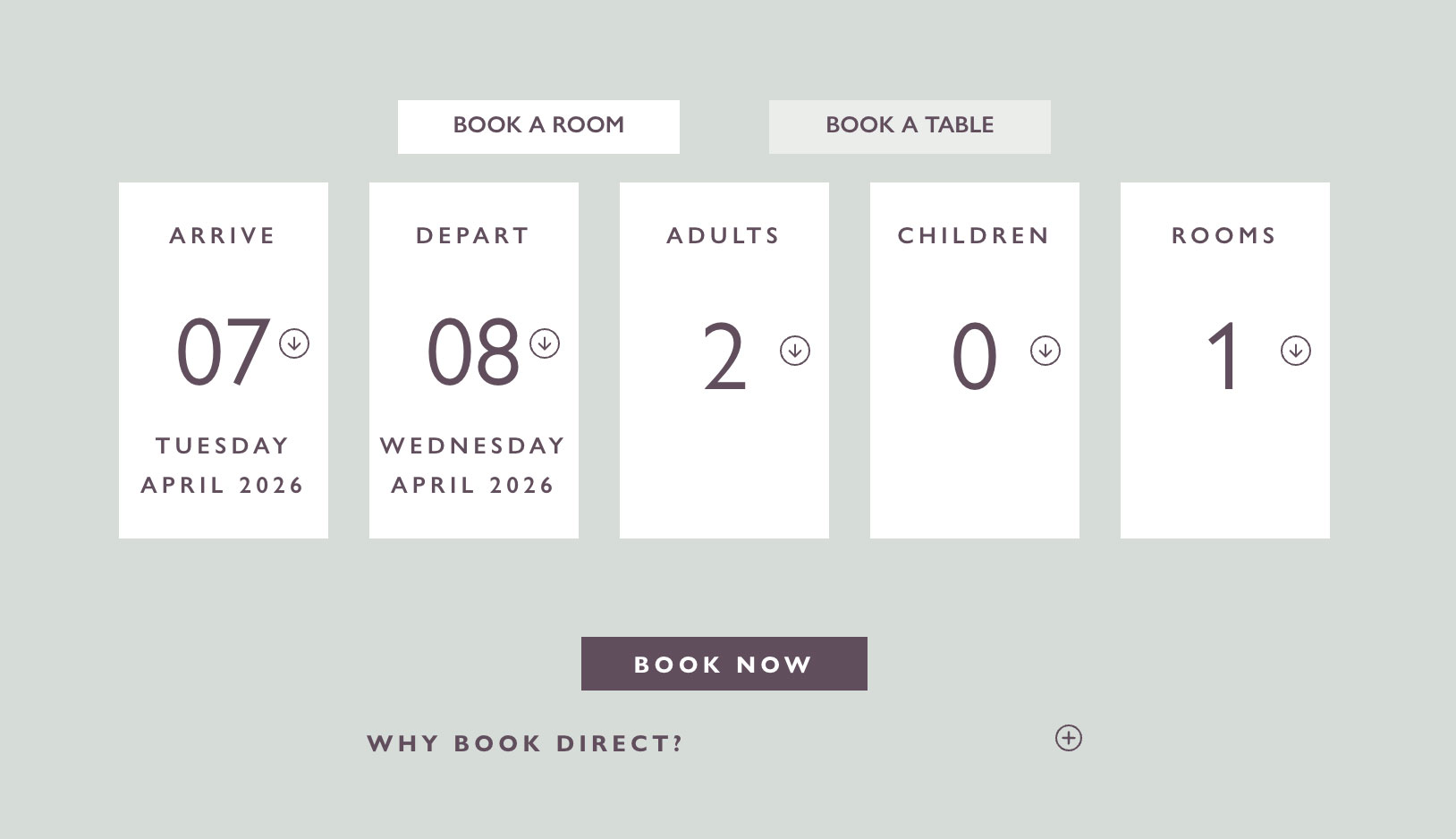
To us humans, this all makes sense and we understand it's purpose. We know we need to enter dates, choose the number of guests, number of rooms and then hit 'book now'.
For AI agents, things aren't always that simple. Unless those inputs and actions are clearly defined, the agent has to interpret the form manually. That can be slow, clumsy and open to error. Try ChatGPT's Atlas browser and give it a detailed prompt (for example, "Book [hotel name] for 3 nights starting November 3rd for 2 adults and 1 child. I'll need a family room and add on breakfast. Also check how far it is from the airport?") to see this in action.
WebMCP helps remove that ambiguity and guess work. By adding declarative labels to the form, developers can define the tool’s purpose, describe what it expects, and make the intended action much clearer.
Even one small addition to the source code, such as toolname="book_now", helps spell out the purpose of he booking widget. Rather than leaving an AI agent to infer what it does, it clearly tells it: this is a tool to book now.
So when an AI agent is tasked with looking for a two-night stay from 21 May 2027 for two adults, it doesn't have to guess what the form is for. It can recognise the booking widget as a defined tool, understand the task more confidently, and follow a clearer path towards completing it.
What next?
WebMCP is still in its early stages. At the time of writing, its features are only available in Chrome Canary, Google’s experimental browser build, and the standard itself remains a work in progress, although it shows the direction that AI agents are likely to embrace. The details may change, but the direction of travel is clear.
WebMCP offers a simple, practical way for development teams to describe key website functionality in a way AI agents can understand more reliably. And as those agents become a more meaningful part of how travellers discover and book hotels, that clarity will start to matter more and more.
The hoteliers who move early on this should be better placed to make their websites easier to find, easier to understand and easier to book, for both humans and AI agents alike.
Agent-ready?
Looking to prepare your hotel website for AI agents? Contact us to learn more.
Image generated with ChatGPT's Images 2.0 model